
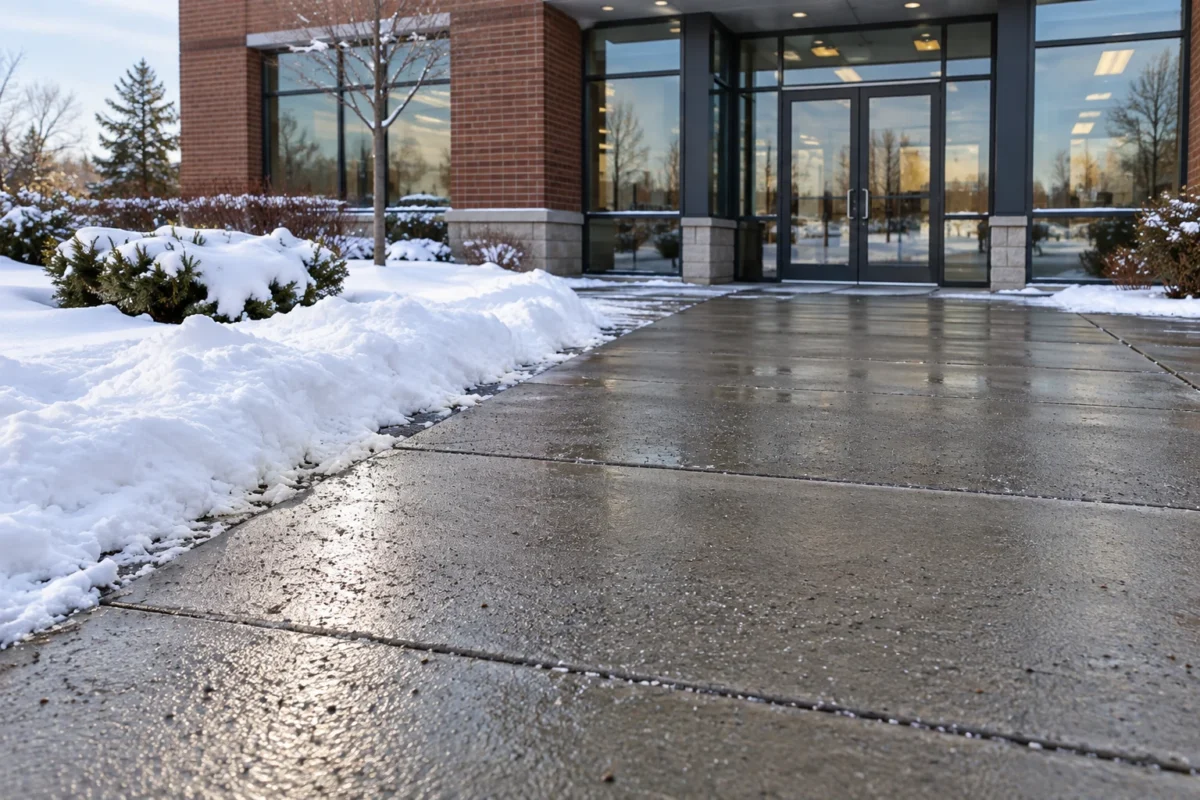
Make the ice-control enquiry specific to the site
Commercial ice-control planning begins with the surfaces people use and the conditions being reported. A parking area, an entrance approach and a shaded pedestrian connection may present different concerns on the same property. The useful starting point is a clear description of where attention is needed, how the area is used and what has changed. “The site is icy” gives less direction than identifying a particular doorway or walking route.
This hub organizes the decisions that lead to the dedicated Commercial Salting & Ice Control service. It also connects that enquiry with snow clearing and property-manager coordination, where those needs overlap. Use the broader Snow Removal hub to see the overall service structure, or continue below to prepare a focused discussion about commercial surface treatment.
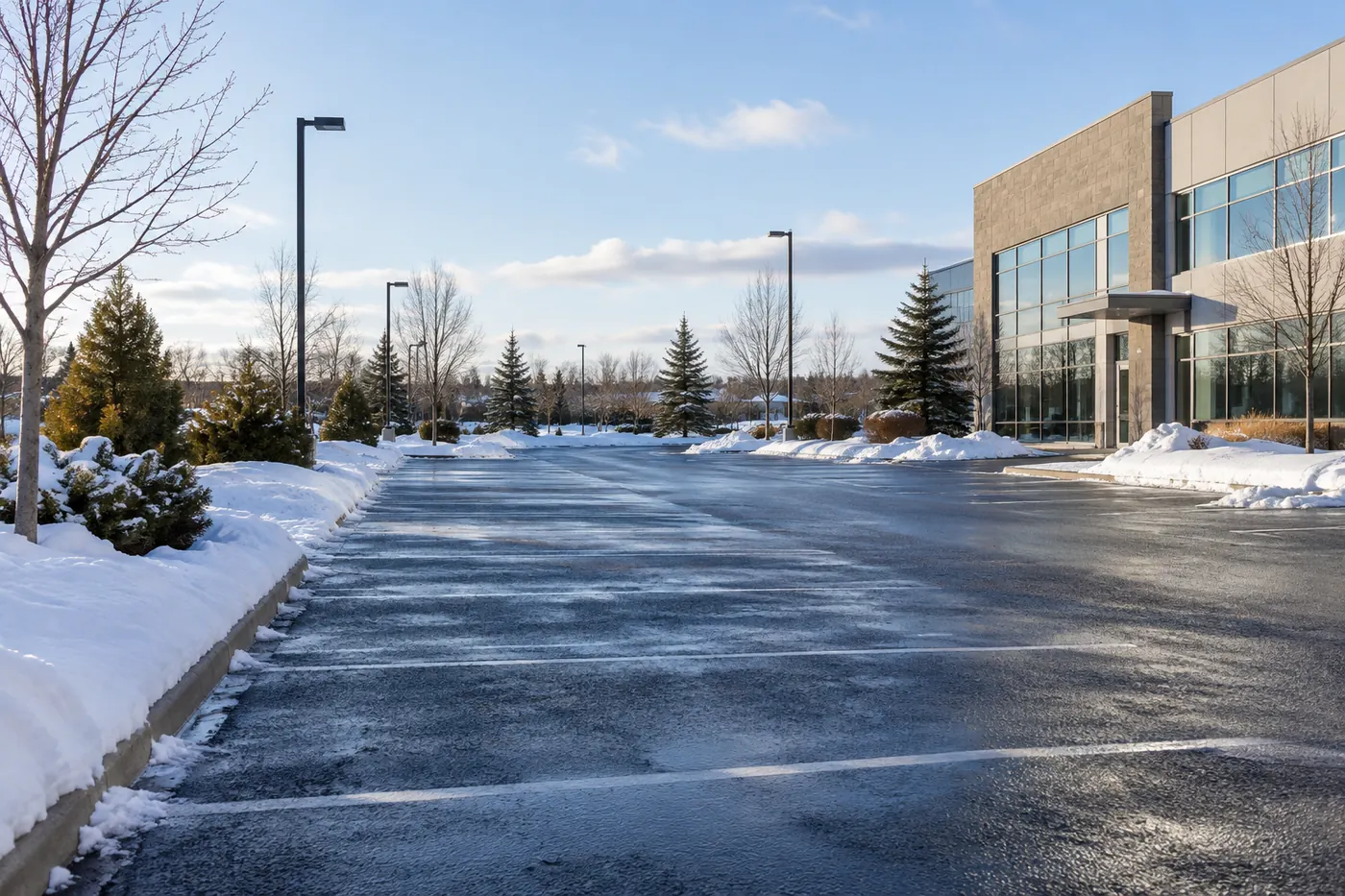
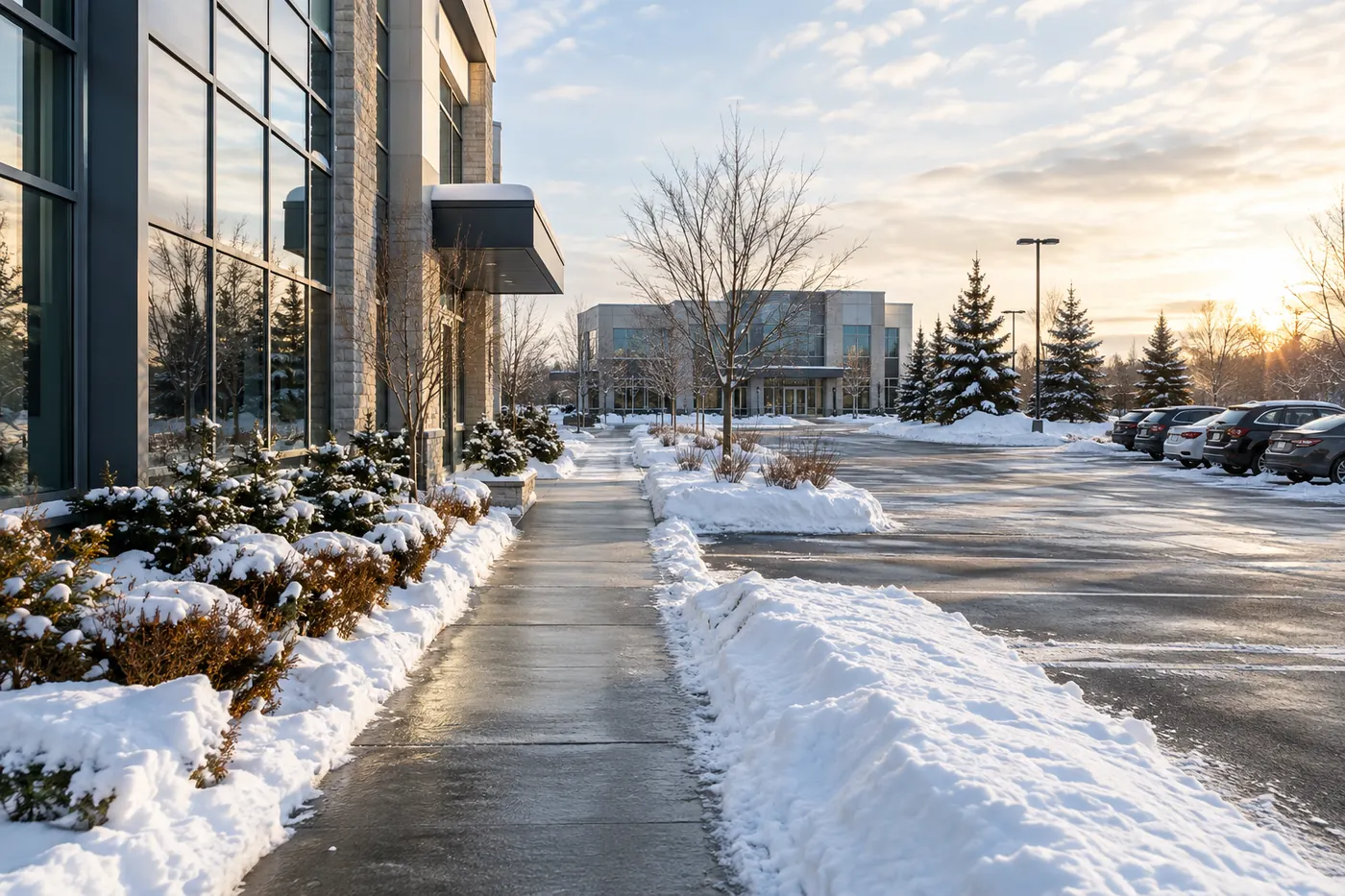
The dedicated service for surface treatment
There is one dedicated salting and ice-control service route in this group. The planning topics on this page help explain a property’s requirements; they are not separate service packages. Treatment choices and the agreed work need to be discussed for the actual surfaces and conditions.
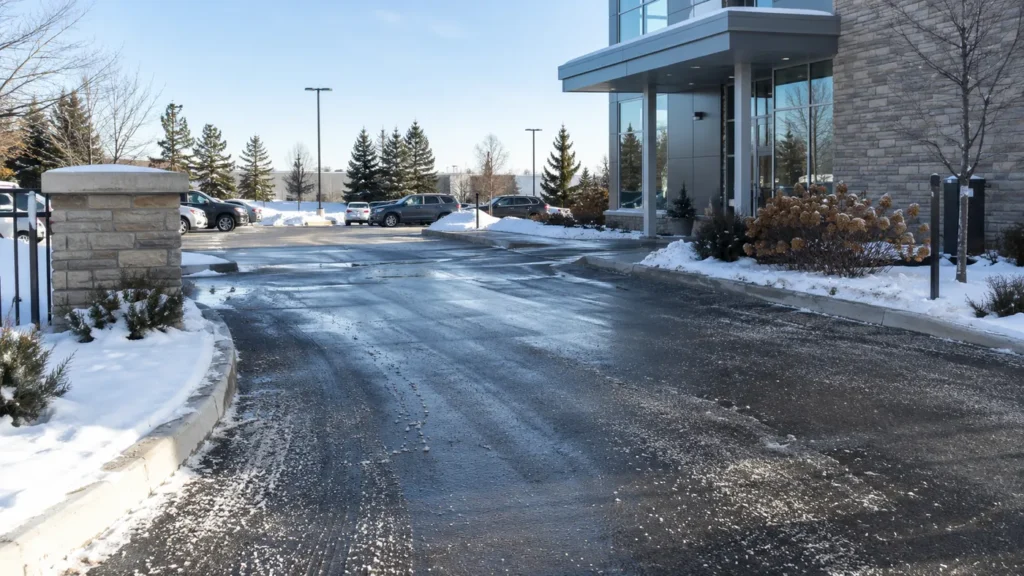
Commercial Salting & Ice Control
Use this page for commercial parking, entrance approaches and pedestrian surfaces requiring a salting or ice-control discussion. Describe the location, surface, business use and condition you have observed. Include the related clearing arrangement and any known access constraints. This route is appropriate when the enquiry concerns treatment of the surface rather than simply removing accumulated snow.
If snow accumulation is also part of the request, use the Commercial Snow Clearing Options hub to choose the relevant clearing page. Keeping each need visible helps clarify where the tasks meet and what needs to be agreed separately.
Distinguish the condition from the action requested
Describe the observed condition before selecting an action. Note whether the concern is on a walking route, beside parked vehicles, near a building entrance or across a larger area. Explain when it was noticed and whether recent clearing or melting has changed the surface. A factual report gives the service discussion a better starting point than a guessed explanation of the cause.
Snow clearing addresses accumulated material and access, while salting and ice-control enquiries address the condition of commercial surfaces. They can be needed together, but neither label describes every winter issue at a property. A recurring concern may also involve site layout or water movement that deserves separate attention. Keep those observations in the enquiry without assuming that surface treatment includes correcting the underlying property feature.
| Observed concern | Useful starting route | Information to add |
|---|---|---|
| Snow blocking an operating route | Commercial clearing | Affected route and site priorities |
| Slippery commercial walking surface | Commercial salting and ice control | Location, surface and time observed |
| Repeated concern at one entrance | Ice-control discussion | Photographs and changes in conditions |
| Different concerns across several sites | Property-manager coordination | Separate addresses, reports and contacts |
Identify the pedestrian network
Start with the routes people actually take through the property. Mark the path from parking to the main entrance, staff access, receiving doors and any other regularly used connection. Include changes in level, steps and narrow sections. A site plan should explain the relationship between these surfaces rather than list the main entrance without showing how people reach it.
Business activity may create different priorities at different times. Staff may arrive through a rear door while customers use the front approach. A receiving route may be active outside office hours. Explain those patterns and identify doors that appear secondary but are important to operations. The scope discussion can then address the required areas with a clearer picture of how the property is occupied.
Record the surface and nearby constraints
Photographs can show surface materials, edges and nearby features that matter to the enquiry. Take wide views to establish location and closer views where a concern is concentrated. Mention adjacent planting, sensitive features, stored materials or restrictions that should be discussed when defining treatment areas. Do not assume every surface on the property should receive the same approach.
Include access issues such as parked vehicles, gates or equipment occupying part of the requested area. Explain whether conditions differ between an exposed section and a sheltered entrance. These observations help describe the property, while the appropriate treatment remains a matter for site-specific assessment. Avoid specifying quantities or application instructions in an enquiry when those have not been established for the actual work.
Keep changing conditions in the communication plan
Winter surfaces can change after a visit as snow moves, melts or the property is used. A report should identify the location and the condition observed at that time. Include what has changed since the earlier report, such as new accumulation, a newly occupied parking area or a different pedestrian route. Current information is more useful than repeatedly sending an old photograph without context.
Ask how site concerns should be communicated and which contact should receive them. Service arrangements should be discussed directly; a website description cannot establish when a visit will occur or how a particular report will be handled. A short record of the location, time and observation helps the responsible people understand the issue and decide what needs clarification or further assessment.
Connect treatment boundaries with clearing boundaries
The areas identified for clearing and treatment may overlap without being identical. Show both on the property plan and ask which surfaces are included in each part of the proposed work. A cleared parking section, a narrow entrance approach and a pedestrian connection can have different practical requirements. Being explicit about those boundaries helps prevent an assumption that one broad phrase covers everything.
The Commercial Snow Removal page is the direct route for a defined business-property clearing scope. Link the two enquiries by using the same site labels and marked photographs. Identify snow storage areas as well, particularly where they sit near routes about which you are reporting surface concerns. Describe the relationship without presuming a technical cause or a specific corrective method.
Coordinate managed properties with consistent reports
For several sites or shared business grounds, use a consistent reporting format. Include the property address, named area, observed condition, photograph and contact who can clarify the report. Keep each property’s information separate so a concern at one entrance cannot be mistaken for a request at another building. Site-specific details should remain visible even when one manager oversees the whole group.
The Snow Removal for Property Managers page addresses the wider coordination needs. Explain who can approve scope changes and who is available on site. If occupants report concerns directly, establish how those observations reach the responsible contact. Clear information supports useful discussion without turning every observation into an unconfirmed instruction to alter the work.
Prepare photographs and priorities before contacting the team
Send the Oakville address, the commercial surfaces involved and the access priorities relevant to the request. Add wide photographs showing the site arrangement, then label close-up images of affected areas. Explain any existing clearing arrangement and state whether the concern is a current condition or planning for the coming winter period.
The Commercial Snow Removal Planning Guide can help assemble the wider site record, including pedestrian priorities, snow storage and contacts. Keep the ice-control enquiry focused on the surfaces and conditions you need discussed. The service team can then clarify the proposed scope, information still needed and how the request relates to other winter work at the property.
Questions about commercial ice-control planning
Which service page should I use for salting?
Use Commercial Salting & Ice Control. Provide the address, affected surfaces, observed conditions and site access details so the discussion concerns the actual commercial property.
Should I choose a treatment before sending an enquiry?
No. Describe the condition and area needing attention. Treatment choices should be assessed for the surfaces and circumstances rather than inferred from a general website description.
What helps explain a recurring surface concern?
Use labeled photographs, the time of the observation and a description of relevant changes. Identify the exact entrance or route and explain how people use it.
How should a manager report concerns at several sites?
Separate each report by address and named area, include current photographs and identify a contact. Make clear who can confirm instructions or approve any proposed change in scope.