DIRECT ANSWER
What does this service cover?
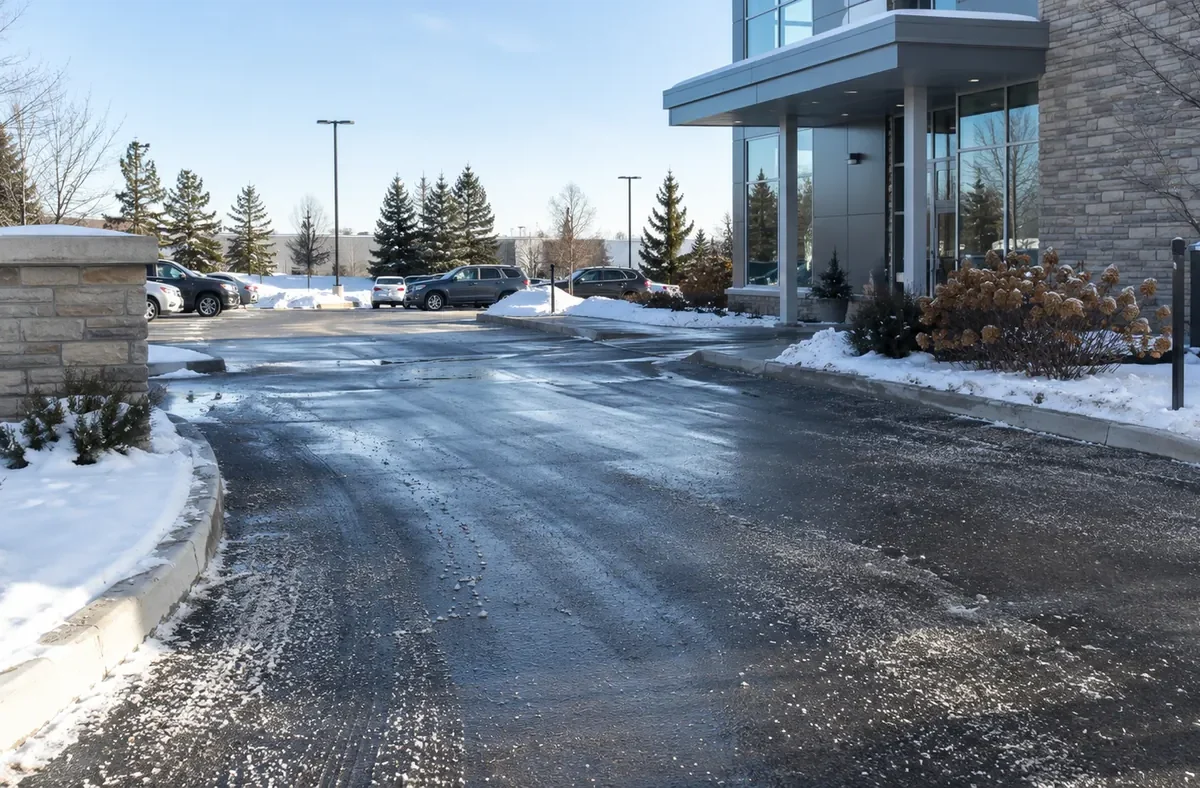
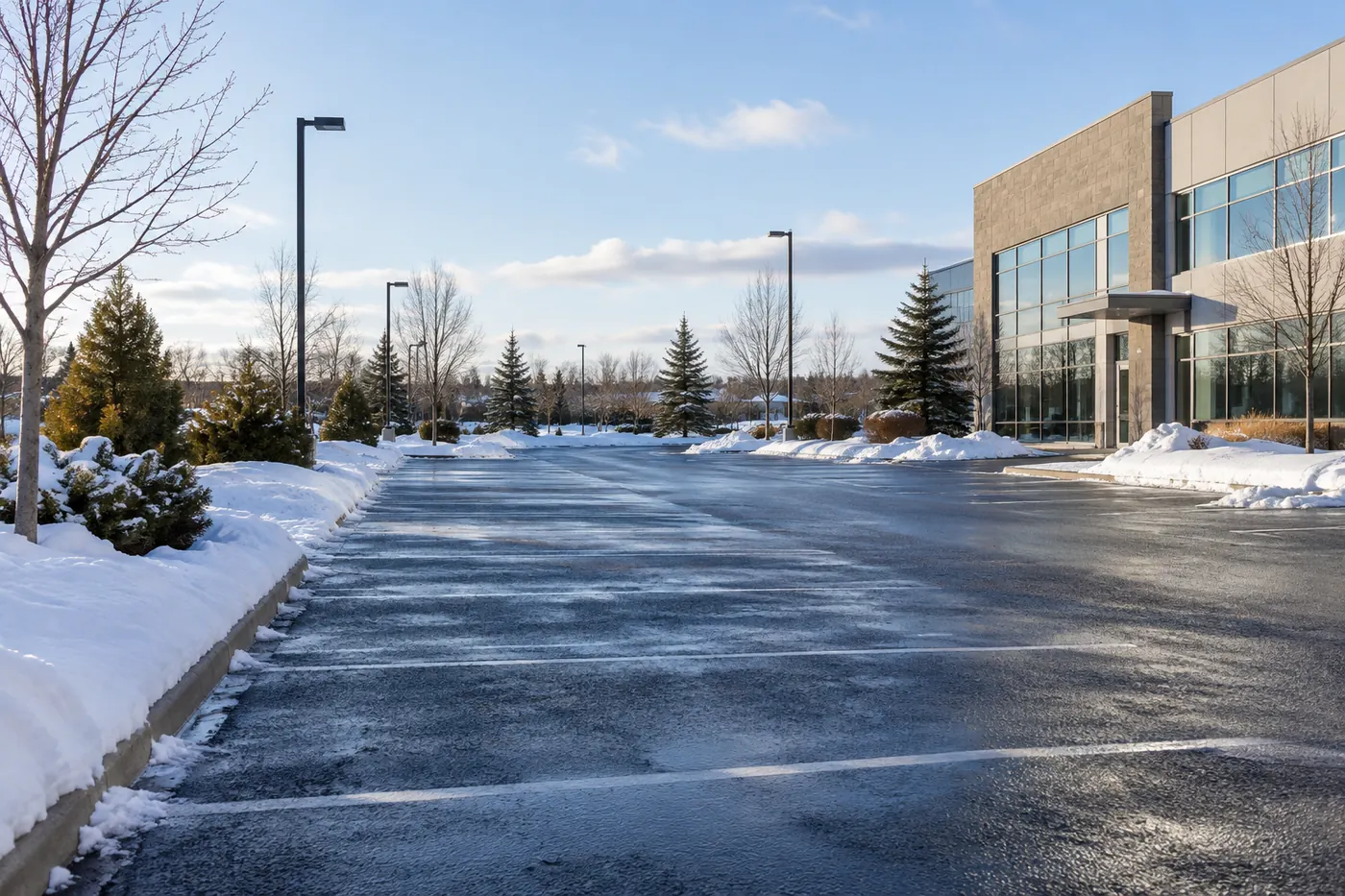
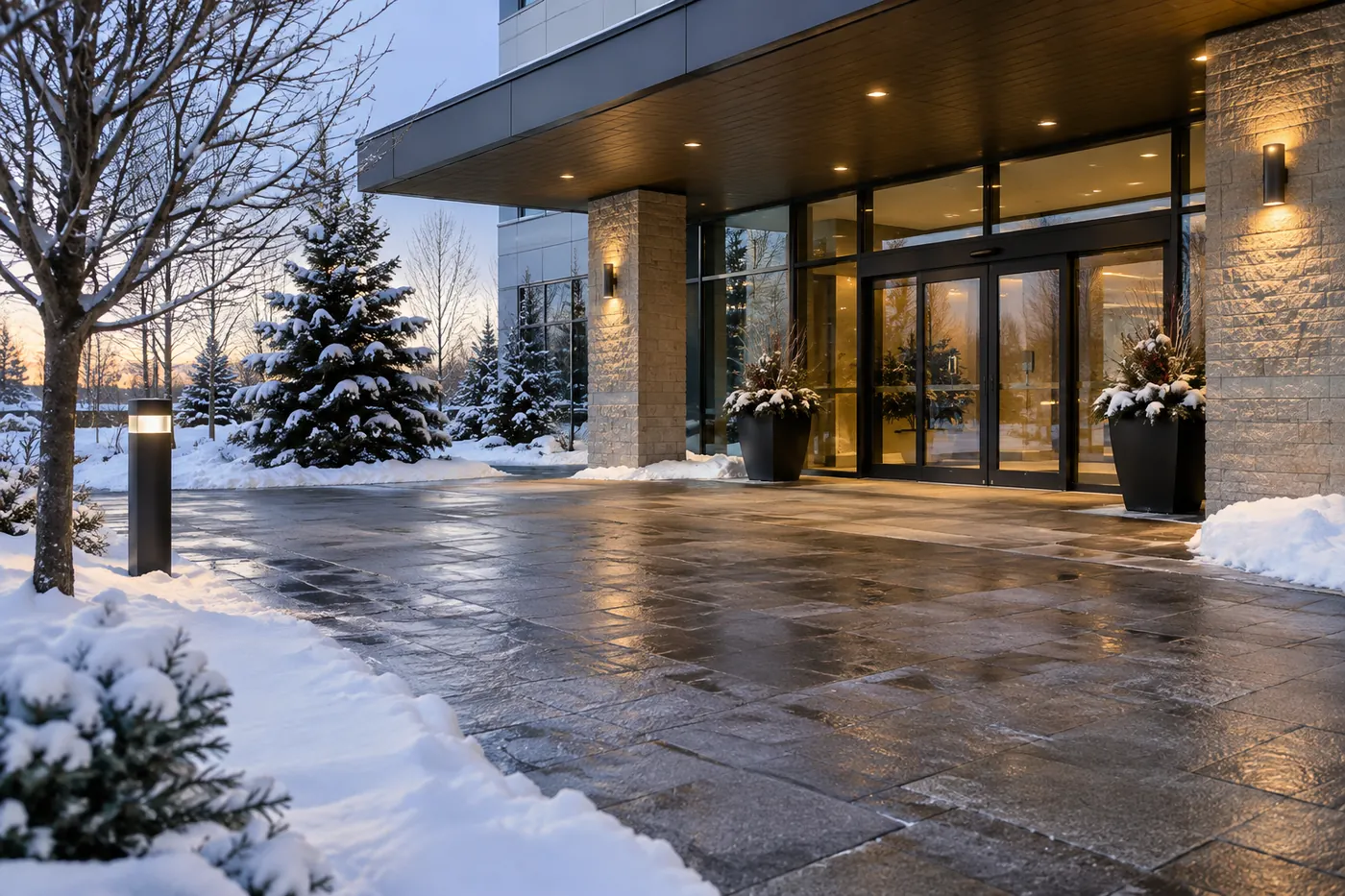
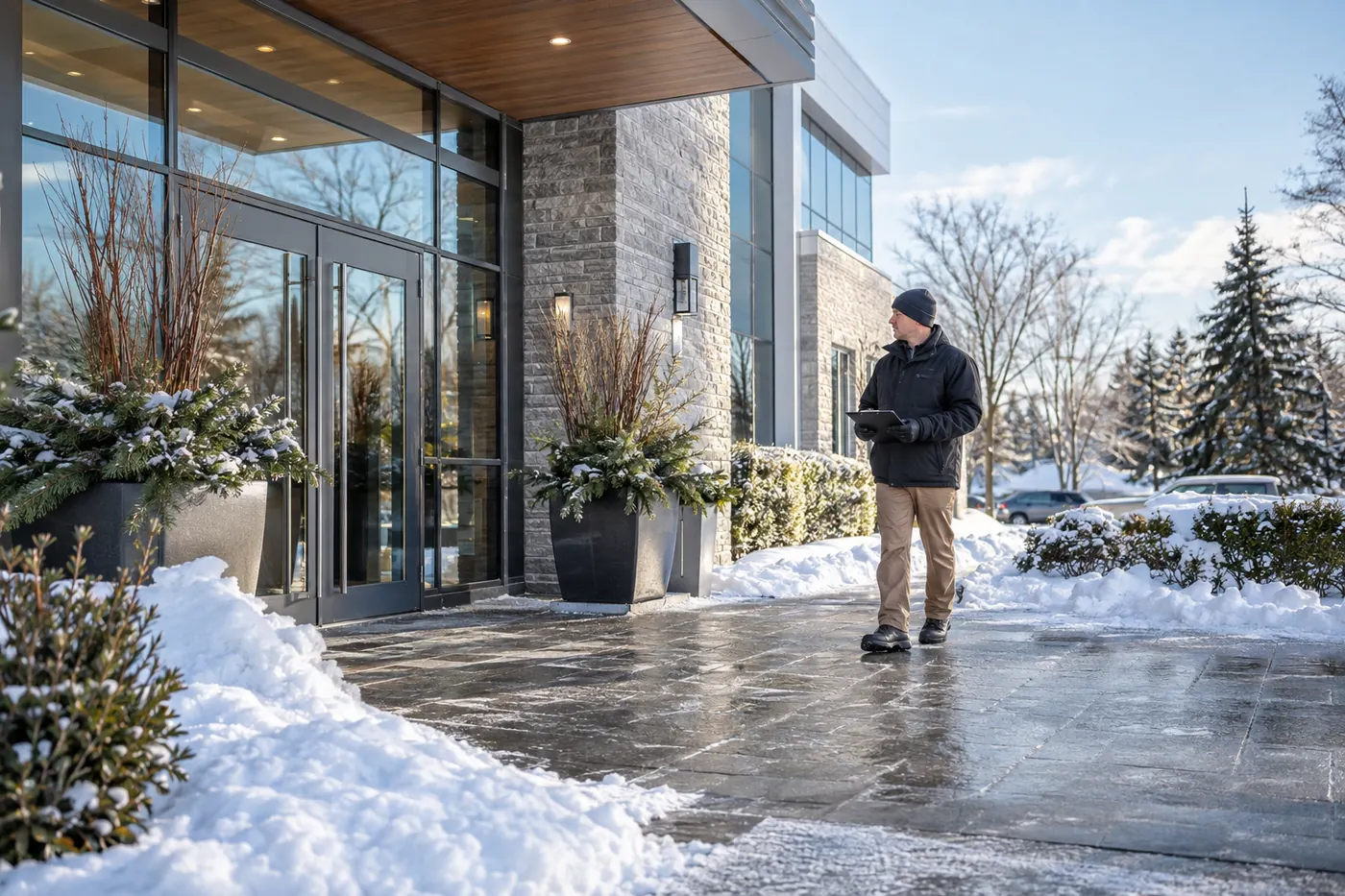
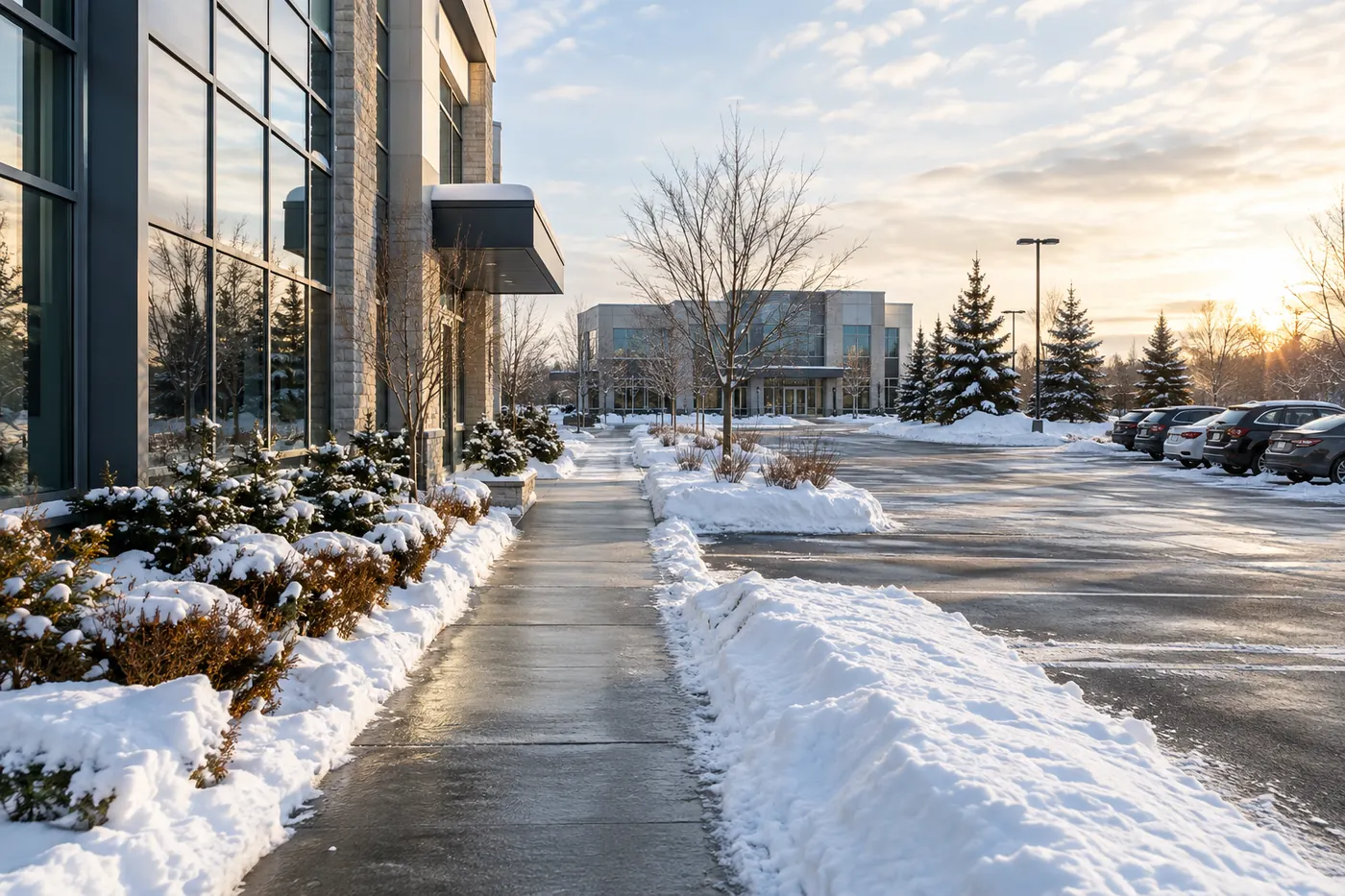
Commercial Salting & Ice Control in Oakville starts with the existing property rather than a product selection: winter pedestrian entrances and parking areas can refreeze after mechanical clearing. The right scope depends on priority routes, freeze-thaw exposure, material selection, timing and records. Before selecting finishes or a schedule, map where the area begins and ends, how people move through it and what must remain usable during the work.
In Oakville, commercial salting & ice control can be a standalone improvement or part of a coordinated outdoor plan. Look at adjacent lawn, planting, entrances, hardscape and drainage together. A tidy surface that solves one issue while making a neighbouring path harder to use is a poor long-term fit. Describe the current condition and the result you want; the project can then be assessed around measurable site conditions.
Start with the existing conditions
Walk the entire area before defining commercial salting & ice control. Record dimensions, slopes, changes in surface, access gates, trees, downspouts, utilities, property boundaries and any places that stay wet. Observe what changes after rain, during daily use and in winter. Winter pedestrian entrances and parking areas can refreeze after mechanical clearing. Photos taken from several directions help show the relationship among the problem, the building and nearby landscape features.
Ask whether winter pedestrian entrances and parking areas can refreeze after mechanical clearing. If a previous surface has failed, determine whether the failure is limited to the visible material or connected to supporting soil, base, water movement or repeated traffic. The answer changes removal quantities, preparation and whether another service should be planned before the visible finish. Note where equipment and materials can enter without damaging features that will remain.
Define the scope before choosing a finish
For commercial salting & ice control, the decisions that most affect the result are priority routes, freeze-thaw exposure, material selection, timing and records. Put those decisions in writing beside the intended area and the connections to existing features. The same name for a service can cover very different work: a compact office entrance, a loading route and a broad parking area have different access, weather and maintenance demands.
Separate essential work from optional enhancements. Essential work addresses the function that prompted the request; enhancements may improve the visual edge, seating, privacy, seasonal interest or ease of care. If the project includes Commercial Snow Removal in Oakville or Commercial Salting & Ice Control in Oakville, describe where one scope ends and the next begins so finished elevations, borders and materials make sense together.
Preparation, materials and sequence
The working method may include agreed treatment zones and monitoring scope for commercial paved areas. Materials should be chosen for this area’s actual use, exposure and desired upkeep rather than a colour photograph alone. Existing material worth keeping must be protected; unwanted material should be removed to a clear, agreed boundary. Where the soil or base is unstable, a cosmetic finish alone will not address the underlying condition.
A practical sequence begins with the site review and measurements, followed by any required locate or approval check. Protect nearby planting and surfaces, establish access and waste removal, complete groundwork, then install the visible materials or planting in an order that preserves drainage. Finish by inspecting edges, transitions and cleanup. Confirm before work whether restoration of access routes, adjacent turf or beds is included.
Water, grade and neighbouring areas
Changes to commercial salting & ice control can alter where rain and snowmelt collect. Look for low points at the building entrances, loading areas and pedestrian transitions; follow water across the property to its intended outlet. Do not direct runoff at a neighbouring lot or bury a shallow swale under soil, mulch or paving. Winter conditions in Oakville can change between a snowfall and a thaw. The scope should identify where snow will be placed, which pedestrian paths matter most and how any ice-control request will be handled.
When the property has standing water, see Yard Drainage & Surface Water Management in Oakville alongside any surface or planting work. Where levels must change, Lawn Grading & Yard Leveling in Oakville may need to precede the finish. The goal is a coherent water route for the whole site, not a visually level patch that simply moves a wet area elsewhere.
Access, boundaries and approvals
Service timing, trigger depth and event response must be agreed for the specific property and contract. Clearing snow cannot ensure every surface will remain free of ice as temperatures and moisture change. Identify any easement on the survey, confirm property limits and keep access to utility equipment, gates and drainage points. For excavation, request the required utility locates before digging. Narrow side entries, mature tree roots and established paving can change how work is carried out even when the finished area seems small.
It is useful to decide how the business site will function while the work is underway: which entry remains open, where materials can be staged and how vehicles or bins can be moved. Confirm these practical constraints before a fixed scope is accepted. On commercial properties, include pedestrian and tenant circulation in the plan.
What affects the estimate?
The estimate reflects size, access, removal, existing condition, material choice and the amount of preparation needed. For commercial salting & ice control, priority routes, freeze-thaw exposure, material selection, timing and records may make a bigger difference than the visible finish itself. Measurements from photos are useful for a first conversation, but slopes, buried conditions and transitions usually need a site-specific assessment.
Ask for the scope to distinguish preparation, materials, disposal, edges, nearby restoration and any optional work. Verify how changes discovered after removal would be discussed. No universal price is reliable across every Oakville property; the landscaping cost guide explains the main cost drivers without pretending that unrelated lots should have the same quote.
Care and longer-term use
After installation or the initial visit, care depends on the materials, weather and use of the area. Keep drainage routes visible, remove debris that blocks edges and watch how the area performs through rain and freeze-thaw cycles. For planted work, establish watering and maintenance appropriate to the chosen plants and season. For paved work, keep joints and edges under observation.
If the goal includes recurring care, discuss Property Maintenance at the same time as the installation. A maintainable design leaves enough room to mow, trim, clear snow and reach beds without damaging a new feature. The most useful handover explains what was included, what routine upkeep involves and what conditions should prompt another review.
Common questions about Commercial Salting & Ice Control in Oakville
Can this be done without changing the whole yard?
Often, if the existing elevations, drainage and adjacent surfaces can support a defined scope. A site review identifies the connections that still need attention.
What should I share when requesting an estimate?
Include the Oakville address, photographs, approximate dimensions, access information, the existing issue and desired timing. Mention any drainage or boundary concerns.
How do I compare options?
Compare the preparation, materials, included edges, restoration and upkeep for each option. The least expensive visible finish may not address the underlying condition.
Can related work be planned together?
Yes. Planning commercial salting & ice control in oakville with Commercial Snow Removal in Oakville, Commercial Salting & Ice Control in Oakville can avoid conflicting grades and repeated disturbance of the same yard.