
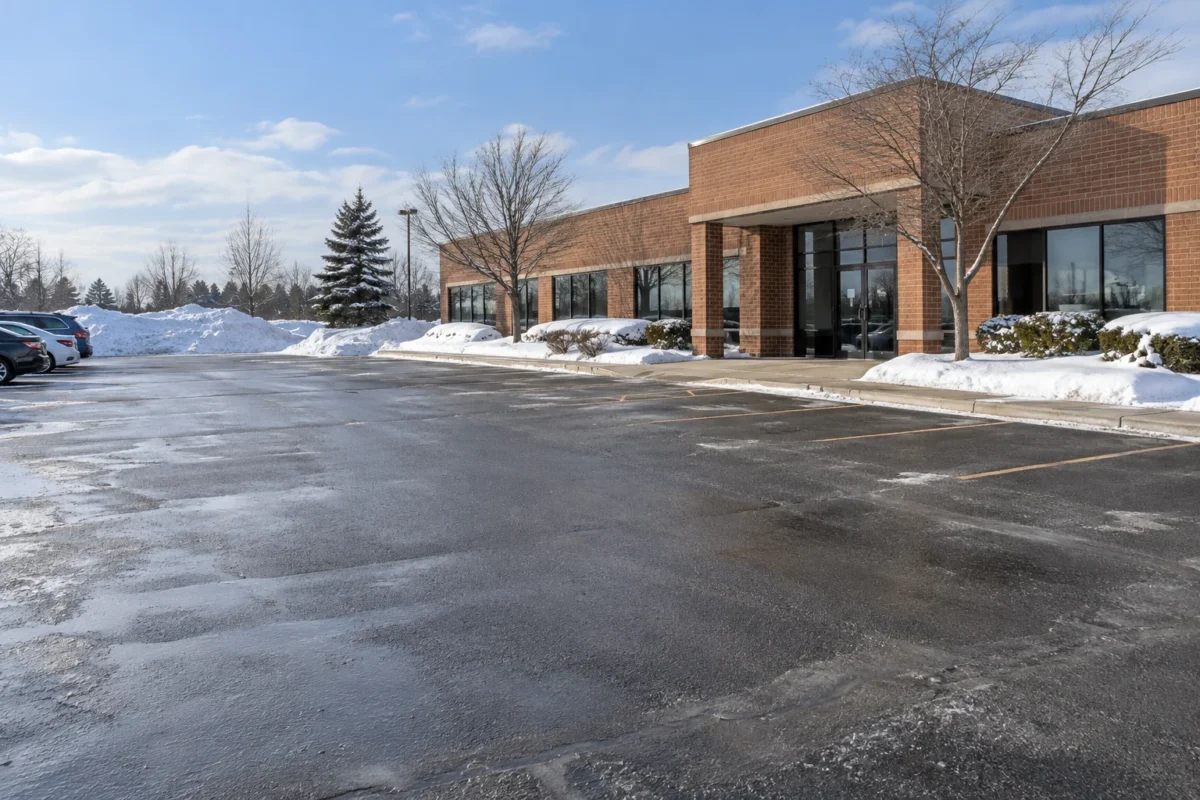
Start with the clearing decision your property needs
A commercial snow-clearing request begins with the way people and vehicles use the site. Parking areas, doors, loading access and pedestrian routes each have a purpose. The useful first question is which areas belong in the clearing scope and how their priorities fit the business operating pattern. A property with several entrances may need a different discussion from a single-site business with one main access route.
This hub connects the two dedicated clearing routes: Commercial Snow Removal and Snow Removal for Property Managers. Use the first for the work at a business property and the second when management, shared responsibilities or multiple sites drive the coordination need. The broader Snow Removal hub also connects clearing with salting and ice-control planning.
Choose the service route that fits your role
Both routes begin with actual site conditions. The distinction is how the enquiry should be framed: a defined property-level clearing need, or the management work required to coordinate winter access across occupants, contacts and locations. Selecting a route helps you provide the most relevant information; it does not substitute for agreeing a property-specific scope.
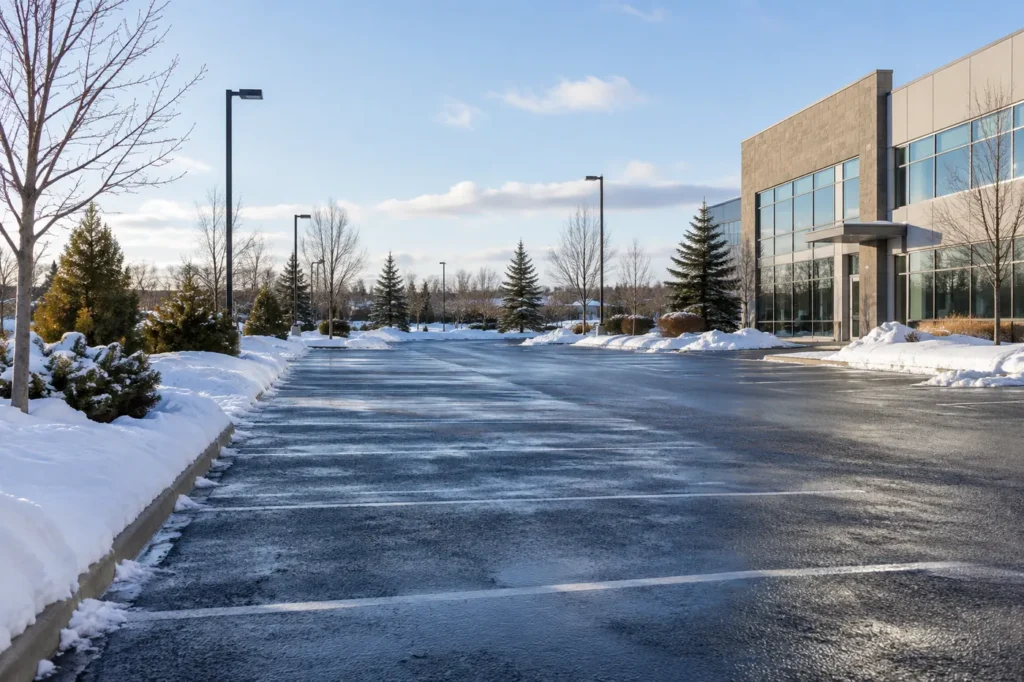
Commercial Snow Removal
Start here for business parking, entrances, loading areas and pedestrian routes that need a defined clearing scope. Send the address, current site photographs and an outline of the areas involved. Identify the access that supports daily operations and any physical constraints affecting movement or snow storage. This is the direct route when the enquiry concerns the clearing work at a particular business property.
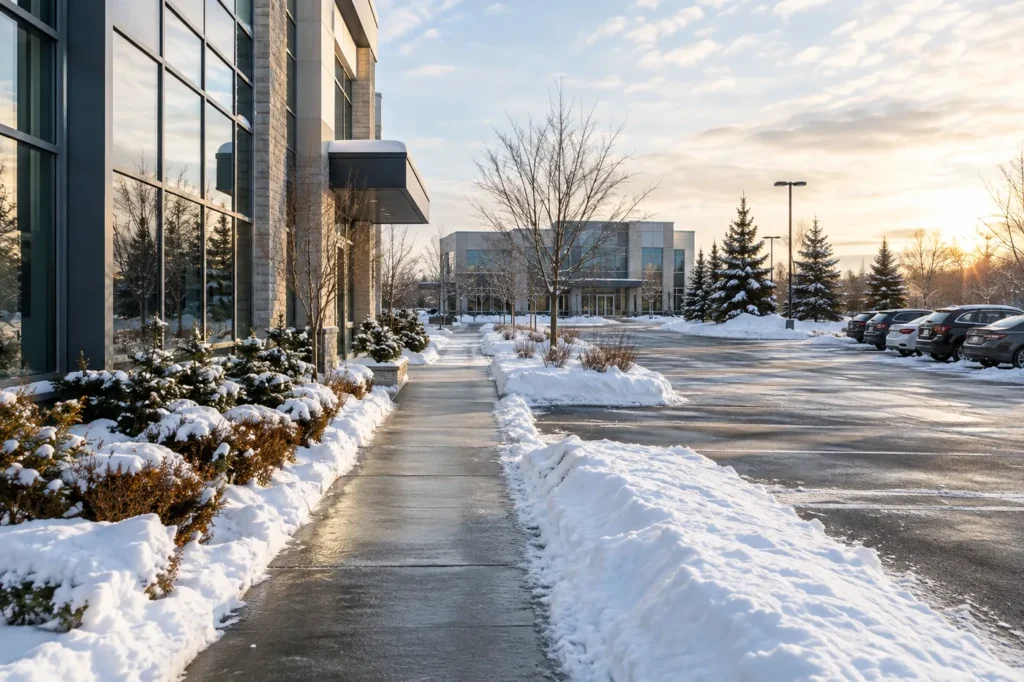
Snow Removal for Property Managers
Choose this page when the challenge includes coordinating shared grounds, multiple properties or several on-site contacts. Describe your management role, the sites involved and who can confirm priorities or approve changes. Building a usable contact and site-information record can be as important as defining the clearing areas, especially when tenants or staff raise concerns from different locations.
Translate business activity into site priorities
A plan is easier to discuss when each priority has a stated reason. A main entrance may serve arriving staff and customers. A loading area may support scheduled deliveries. An internal route may connect parking to the building. Identify the function of each area instead of labeling every surface “urgent.” This gives the scope discussion a clear connection to business activity.
Explain when the property is occupied and whether its use changes by day or shift. Note delivery arrangements and doors that are used even when the main office is closed. Timing and service arrangements need direct discussion, and should not be assumed from a page title. Share the information needed to assess the site without treating the enquiry as a confirmed operating commitment.
| Site question | Information to provide | Why it helps |
|---|---|---|
| Which areas are used first? | Entrance and route priorities | Connects clearing scope to daily activity |
| Where can snow be stored? | Proposed storage areas and restrictions | Reveals conflicts with parking or access |
| Who reports a concern? | Primary and on-site contacts | Keeps instructions clear |
| Do several properties differ? | Site-specific maps and notes | Avoids applying one assumption everywhere |
Define boundaries that remain visible during winter
A photograph taken before snowfall can show curbs, landscape edges, raised islands and other features that become harder to identify later. Use wide views that explain how the property fits together, then add closer images of particular constraints. Mark the requested clearing areas on a simple plan, including pedestrian connections rather than showing only the vehicle surface.
Identify shared access and areas managed by someone else. A continuous parking or walking surface may cross a responsibility boundary that is not obvious on site. Clarify which loading bays, doors, paths and parking sections belong in the enquiry. If the boundary is uncertain, resolve it with the appropriate property contact before treating it as part of the agreed work.
Discuss snow storage as part of the clearing scope
Moving snow changes the use of space on a commercial property. A proposed storage area may conflict with parking, walking routes, deliveries or the visibility needed at an entrance. Identify preferred locations and areas that should remain available. Include landscaping, building access and site features in the discussion so storage is considered alongside the surfaces to be cleared.
Site conditions can change as winter continues. Stored snow may occupy more of the available area, and business activity may make an earlier arrangement less suitable. Keep a contact available to discuss those changes. Where the original plan no longer fits the site, ask for an assessment of the available options rather than assuming additional work or a different storage arrangement is already included.
Keep vehicle clearing and pedestrian access connected
A cleared parking surface does not by itself explain how people reach the doors. Show the walking routes between parking, drop-off points and entrances, along with steps, narrow passages or changes in level. Note any doors used by staff, service providers or occupants that are easy to miss from the main parking area.
Identify where vehicles may obstruct access and how the site contact handles those situations. Communicate changes such as temporary barriers, parked equipment or a relocated loading area. The purpose is to keep the written scope aligned with the routes the business actually uses. Photographs help document these details, but they should support current instructions rather than replace communication about a changed site.
Separate snow accumulation from surface ice concerns
Snow clearing and ice treatment are related decisions, but the same request may not explain both. A report about accumulated snow asks for attention to clearing and access. A report about slippery surfaces needs information about the affected area and the observed condition, including whether it follows clearing, melting or another change on site. Describe what you can see without guessing a technical treatment.
Use the Commercial Ice Control Planning hub to understand the separate salting route. If you already know the enquiry is about treatment of commercial surfaces, go to Commercial Salting & Ice Control. Keeping the two needs explicit helps you ask what is included and how concerns should be communicated.
Make multi-site communication usable
For several properties, provide an address and a named contact for each site, with one coordinating person where appropriate. Use consistent names for entrances and areas so a report can be matched to the correct location. Include access instructions that differ between buildings, such as controlled gates or separate receiving areas.
Agree how site information should be updated when occupancy or operations change. A manager may need to distinguish a tenant observation from an approved change to the clearing scope. Record the concern, identify the site and involve the person who can clarify instructions. The property-manager service page provides the most relevant starting point for this kind of coordination.
Prepare your commercial winter enquiry
Send the Oakville property address, marked clearing areas, wide photographs, operating pattern and contact details. Explain which routes support the business, where snow storage could be considered and what existing constraints need attention. For multiple sites, separate the information by address instead of combining unrelated photographs into one unlabeled enquiry.
The Commercial Snow Removal Planning Guide can help organize that information before you contact the service team. Use it to prepare a focused discussion of clearing, pedestrian priorities and coordination. Scope, arrangements and any additional work should be established directly for the property, with the final plan reflecting actual access and site conditions.
Questions about choosing a commercial clearing route
Which page should a single business property use?
Start with Commercial Snow Removal. Include your address, requested clearing areas, operating pattern and site photographs so the enquiry describes the business property clearly.
When is the property-manager route useful?
Use it when the request involves shared grounds, multiple properties or coordination between managers and on-site contacts. List the locations and explain who can clarify or approve instructions.
Should the site plan include walking routes?
Yes. Show the connections between parking and entrances, together with any separate staff or service doors. Vehicle surfaces alone may not describe the full access need.
Does clearing automatically describe the salting scope?
No. Raise ice-control needs separately and ask how the commercial salting scope would be defined. Provide the affected surfaces and observed conditions instead of assuming a particular treatment is included.