
Choose the assessment that matches the water problem
Uneven ground, a puddle beside a patio and a lawn needing watering are different starting points. Grading, drainage, irrigation and retaining walls each address a particular part of the site. This hub helps you describe the concern and choose the relevant service without assuming one solution fits every yard. The objective is to understand how levels, water and outdoor use connect before committing to a visible finish.
Begin with what you can observe. Note where the issue appears, when it occurs and what changed before it began. Photographs during or after rainfall can be useful alongside dry-weather views. If you are planning a new landscape rather than solving an existing concern, identify which surfaces, structures or planting areas might change the site’s relationships.
Distinguish the four service scopes
Yard grading and lawn levelling
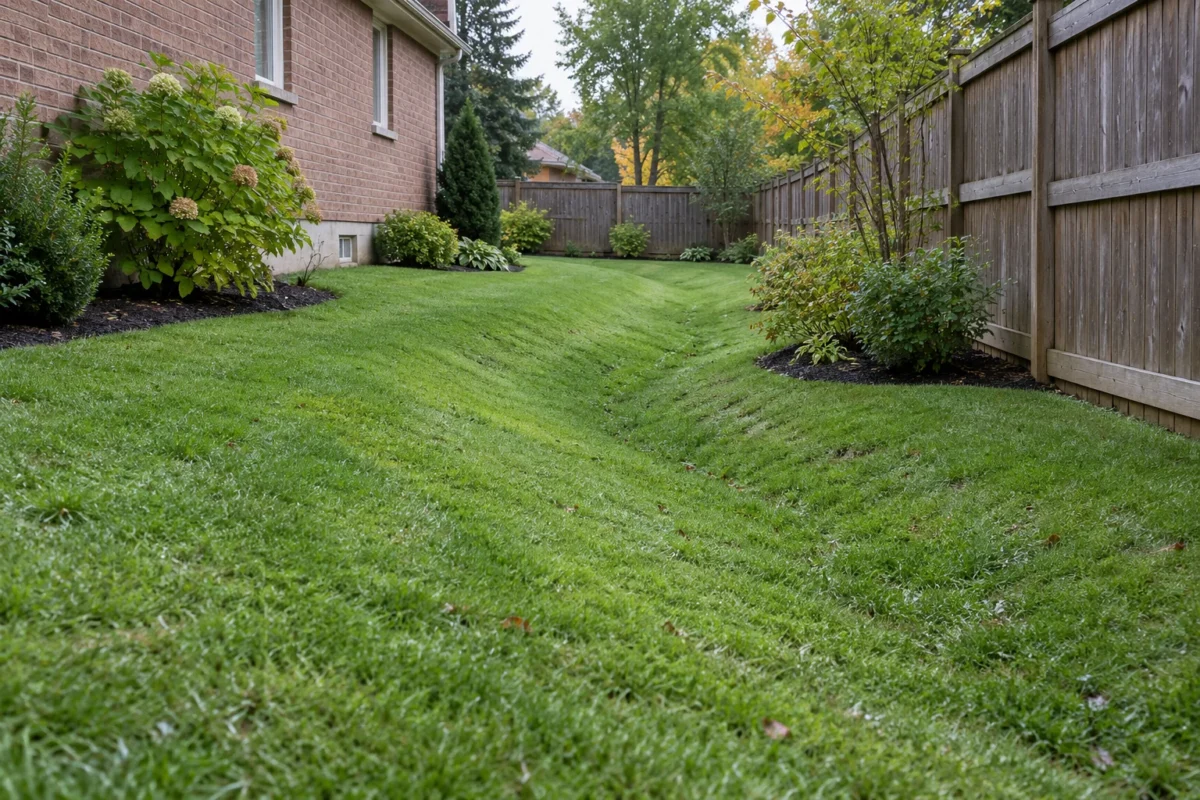
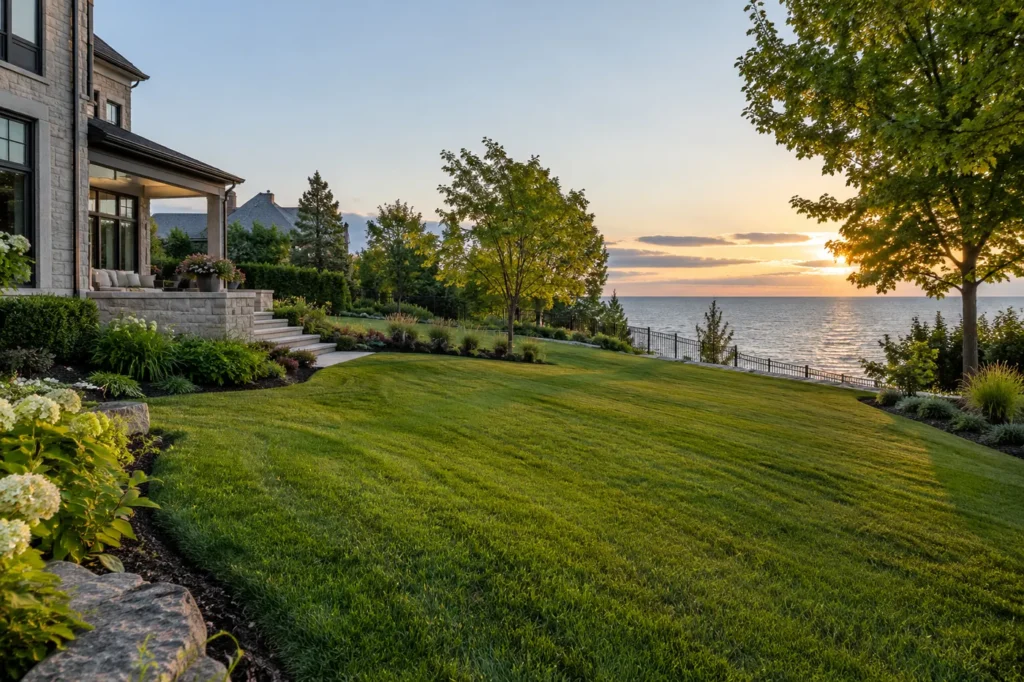
Start here when ground levels or an uneven surface need assessment. The question is how proposed elevations relate to surrounding features and existing drainage, rather than whether the yard can simply be made flat.
Yard drainage and surface water management
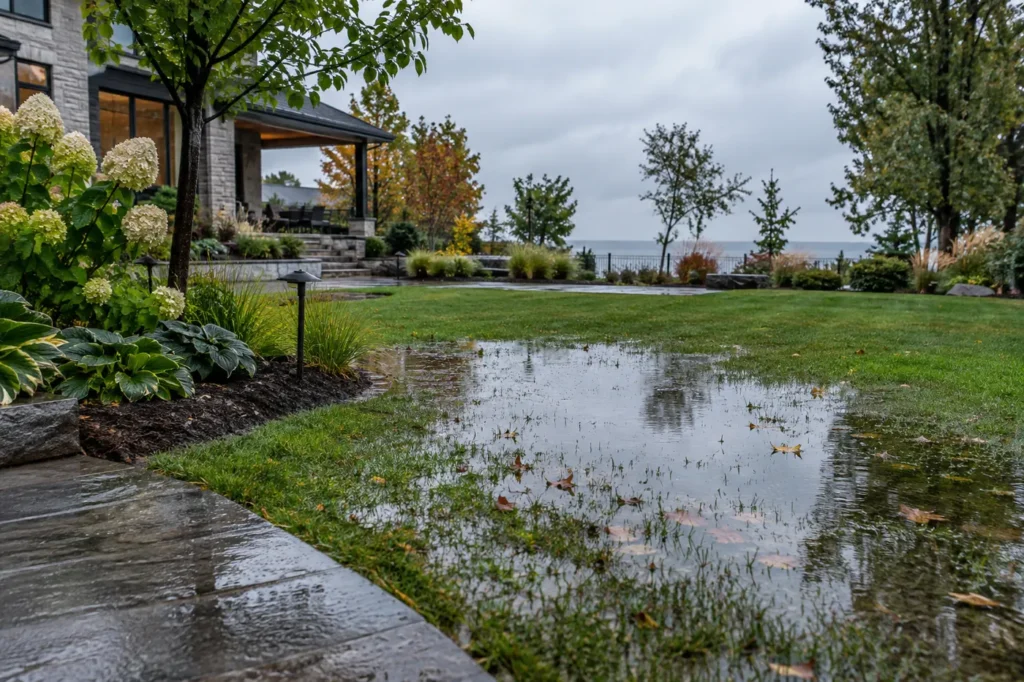
Choose this route for recurring standing water or an unclear runoff path. Describe rainfall, roof discharge and affected areas so the assessment can examine where water arrives and where it can go.
Landscape irrigation systems
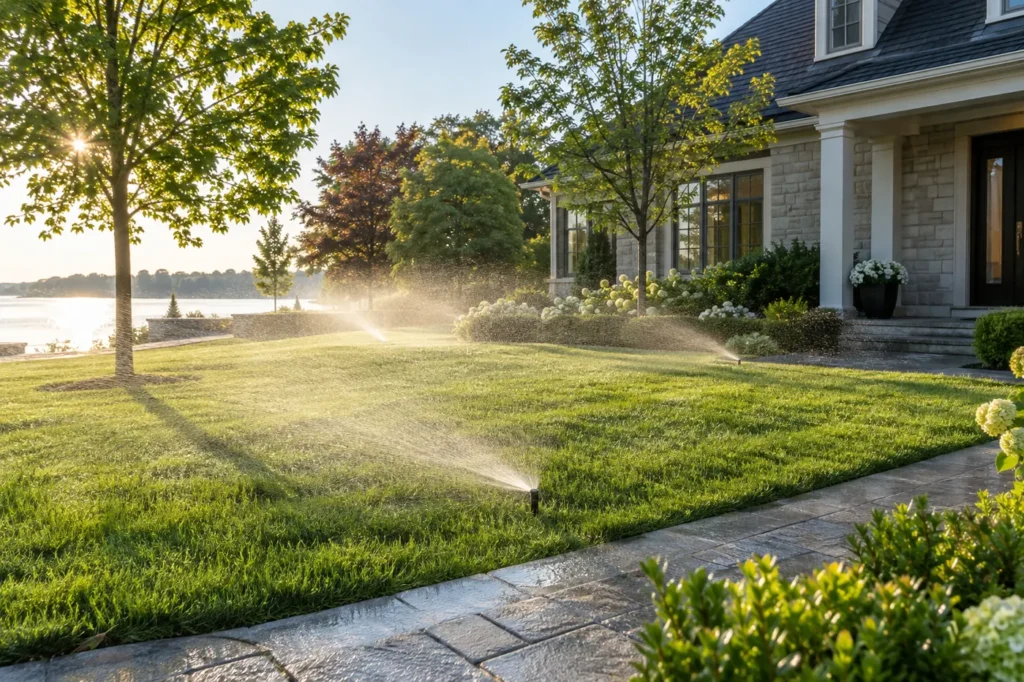
Use this service for planned watering of lawn and planting. It addresses distribution and operation for the chosen landscape; additional watering is a separate question from solving excess water on the site.
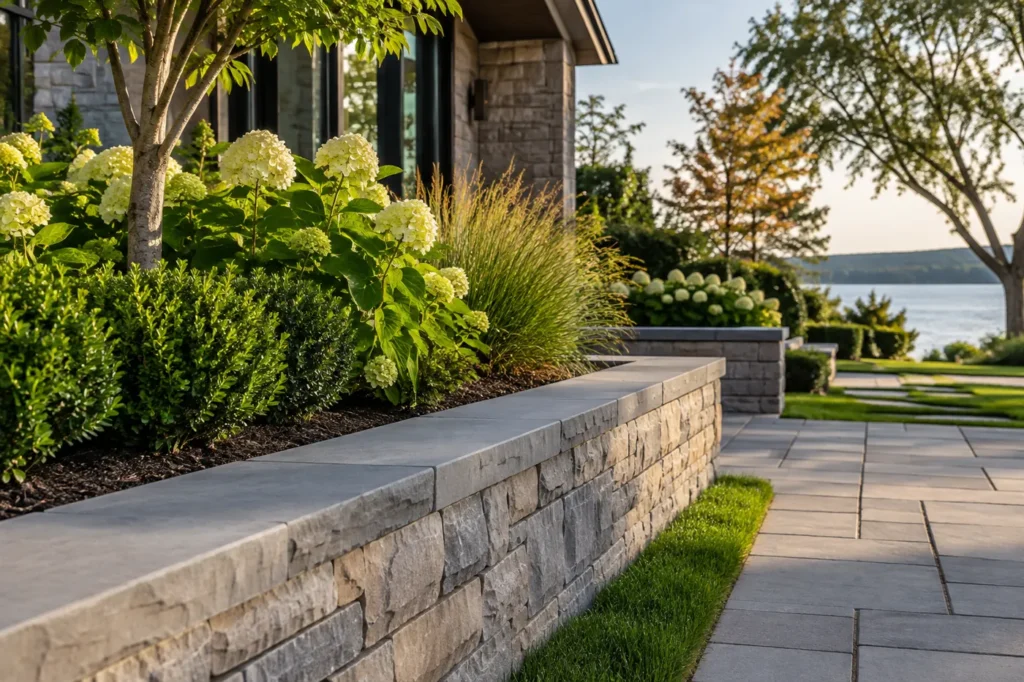
Retaining and garden walls
Consider this scope where a change in elevation must be contained or organized. Discuss the relationship between the wall, adjoining levels and water rather than selecting a wall solely as a decorative border.
Collect observations instead of prescribing a fix
Describe the timing of the concern. Does water appear during rain, remain after surrounding ground has dried, or show up when the irrigation system operates? Does the affected area include a path, lawn, bed or a junction beside the building? These observations help distinguish possible sources. They do not prove a cause, but they give a drainage assessment more useful context than a request for a particular product.
Record recent work nearby: a changed bed, new surface, fence replacement or downspout arrangement. Note whether the issue is longstanding or newly visible. Include wide views showing neighbouring parts of your own yard and closer photographs of the affected area. Avoid relying on a single image of a puddle, because it rarely shows the routes and level relationships that determine the assessment.
Grading and drainage overlap, but they are not interchangeable
Yard grading concerns the shape and elevation of the ground. A request to improve an uneven lawn should still consider what the area connects to. Low spots may differ from a purposeful water route, and a new surface must fit doorways, paths and neighbouring ground. Explain the intended use, such as easier movement or preparation for lawn replacement, rather than requesting a visually level patch in isolation.
Drainage planning follows water from its source through the affected space. A change in grade might be one part of a proposal, but the important question is whether the complete route makes sense. The yard grading guide and Oakville drainage guide explore these related considerations. Use them to prepare questions, then let the site assessment identify which work belongs in the actual scope.
Review the whole route before changing one area
A wet lawn, a patio edge and a planted side yard may be connected. Mark where water first becomes visible and where it travels next. Include roof-water outlets and any relevant existing landscape features in the photos. Ask how the proposed change would affect areas beyond the immediate work boundary. A local improvement needs a coherent relationship to the rest of the property.
The Town’s drainage guidance says changes must preserve drainage, leave swales open and avoid affecting neighbouring properties. Treat those constraints as part of the planning brief.
When an assessment requires more information than a visual inspection can provide, discuss what records, measurements or professional review are needed. An existing survey or grading information may help explain the site. Keep uncertainty visible in the proposal rather than treating an assumed outlet or an unseen condition as established fact.
Keep irrigation decisions tied to the planting plan
An irrigation system should reflect the lawn and planting areas you actually intend to retain or create. If beds are being expanded or a lawn area converted, discuss that layout before considering watering coverage. Describe which areas receive different exposure and which ones are difficult to water manually. The desired watering routine is part of the landscape plan, not an accessory selected after every other decision is fixed.
Where existing irrigation coincides with persistent wetness, explain the timing and affected area during assessment. Do not assume that a brown lawn proves a need for more water or that a puddle identifies the system as its source. Questions about operation, maintenance and the site’s water concern should be considered together. Confirm how the proposed irrigation scope joins later care and who will operate the system.
Use walls to organize levels with a clear purpose
A retaining wall can make a level transition possible where a gradual slope does not fit the intended layout. A garden wall may serve a different purpose. Describe what the proposed wall must retain, which usable area it creates and what lies above and below it. That gives the service assessment a functional brief instead of only a preferred material and length.
Compare the wall option with the surrounding layout. Consider access for construction and maintenance, the connection to steps or paths and the space needed by nearby planting. Ask how water and the adjoining elevations are addressed as part of the wall scope. If technical design or approvals are needed, identify those requirements before treating a sketch as a final construction instruction.
Resolve shared conditions before the landscape finish
New sod, planting or paving can conceal the ground relationships you need to understand. Describe planned finishes alongside the grading or drainage concern so the assessments can be coordinated. The lawn and garden hub helps choose subsequent planting and ground-cover work, while the interlocking and stone hub addresses adjoining paved surfaces.
Work sequence also matters when equipment must cross the yard. Identify which areas can provide access and which features should remain protected. Separate the corrective work from the final restoration in the estimate so the intended end state is clear. If the project is phased, ask how the interim ground will be left and what later work will be needed before the area can be used as planned.
Compare a defined scope and its assumptions
Proposals are easier to compare when they describe the same concern and work boundary. Ask what observations support the proposed approach, what information still needs confirming and how the work relates to surrounding areas. A statement that an area will be improved is less useful than an explanation of which levels, routes or system components are included.
Distinguish assessment, any required design, construction and restoration. Identify whether lawn, planting, paving or access routes affected by the work will be restored, retained or handled separately. Also clarify how newly discovered conditions would be discussed. The landscaping cost guide can help frame these scope questions without reducing a site-dependent problem to a universal price.
Prepare the site information and review dependencies
Provide the Oakville address, wider yard photographs, images showing the concern and a description of when it occurs. Include available survey or grading documents and a sketch of proposed landscape changes. Mark the area you want improved, nearby doors and access routes, and any feature you believe may be related. Share observations as observations so the assessment can test them.
Grade changes or related construction may require Town review. Check the landscaping permits and property planning guide and Oakville’s landscaping guidance for the proposed work.
When you request an estimate, say whether the main concern is uneven ground, recurring water, watering coverage or a level change. You can also return to all landscaping services to plan the wider property improvement around those conditions.
Questions about choosing the right scope
Is a flat yard always the goal of grading?
The useful goal depends on the site’s connections and water route. Describe the desired use and uneven areas, then review appropriate levels rather than assuming every surface should be flat.
Should I request drainage work before choosing new sod?
If recurring water is part of the concern, discuss it before the lawn finish. The assessment can identify whether preparation or related work belongs ahead of the sod installation.
Can irrigation solve an unhealthy lawn?
Watering is one part of lawn care, and visible symptoms alone do not establish the cause. Discuss the actual conditions and intended landscape before choosing a system or changing its operation.
When does a wall belong in this discussion?
When a proposed landscape requires a defined change in level or a retained area. Review the wall together with adjoining ground, water and routes so its purpose and dependencies are clear.